


Starting a new care service involves more than completing a CQC application. Before applying, providers need to establish the correct regulated activities, appoint appropriate leadership, prepare governance systems and gather evidence that the proposed service can operate safely and effectively.
The CQC registration process for new care providers is evidence-led. CQC needs to be satisfied that a provider understands its responsibilities and has the systems, people, policies and resources required to deliver regulated care. An incomplete application or incorrect supporting information can delay registration or result in the application being rejected.
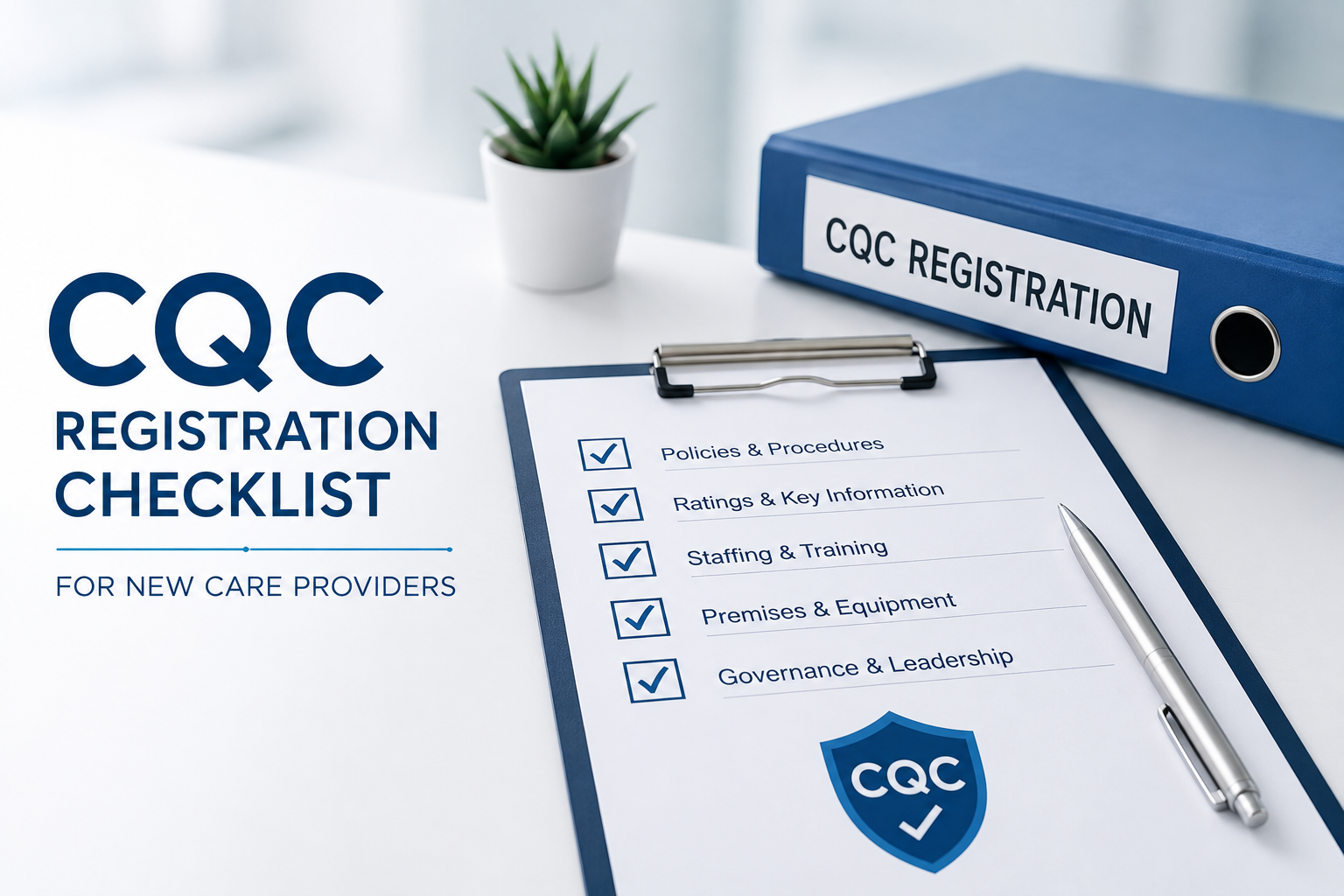
This CQC registration checklist covers the main areas new providers should address before submitting their application.
1. Confirm Whether You Need CQC Registration
Before preparing an application, establish whether the activities you intend to provide are regulated by CQC. This depends on the nature of the care or treatment, rather than simply the name of your business.
For example, providing personal care or certain types of clinical treatment may require registration. You should identify the regulated activities that apply to your service and understand which locations need to be included in the application.
Getting the scope wrong at the beginning can create problems later. Your proposed activities, service model and locations should therefore be clear before you complete the application.
2. Establish Your Business And Leadership Structure
Your legal entity and management structure need to be established before registration. Depending on the provider type, this may involve an individual, partnership or organisation.
New providers should identify the appropriate Nominated Individual where required and appoint a Registered Manager where the service type and provider structure require one. These roles carry specific responsibilities, so the individuals proposed should understand the service, its governance arrangements and their regulatory responsibilities.
You should also have your business registration and data protection arrangements in place. Where applicable, this includes Companies House registration and registration with the Information Commissioner’s Office (ICO).
3. Complete Required DBS Checks
DBS checks should be arranged early rather than left until the application is ready to submit. CQC requires an Enhanced DBS check for relevant applicants, including registered managers, and applications can be rejected where required DBS evidence is missing or does not meet CQC’s requirements.
The DBS certificate must also meet CQC’s current requirements regarding its age, format and information provided. This makes checking the current CQC guidance before submission particularly important.
4. Prepare The Documents Required For CQC Registration
Documentation is one of the most important parts of the CQC registration requirements for new providers. CQC currently requires all provider applicants to submit a defined set of supporting documents, although additional documents depend on the type of service being registered.
Your preparation should include:
- Statement of Purpose
- Safeguarding policy and procedure
- Complaints policy
- Consent policy and procedure
- Recruitment policy
- Infection prevention and control policy
- Medicines management and prescribing policy, where applicable
- Equality, diversity and human rights policy
- Governance and quality assurance policies
- Public and employer liability insurance quote or certificate
- Financial viability statement, where required
The exact evidence required can vary according to the service. CQC also identifies additional documents that may apply to particular provider types, such as care homes, domiciliary care agencies, supported living services and healthcare providers.
5. Write A Service-Specific Statement Of Purpose
The Statement of Purpose is not simply an administrative document. It explains what your service does, where it operates, who it supports and how the service is structured.
It should accurately reflect your aims and objectives, regulated activities, locations, service-user needs, legal entity and relevant contact details. CQC requires providers to maintain an accurate Statement of Purpose throughout registration.
Avoid using a generic template without adapting it to your service. The information should correspond with your application and the actual service you intend to operate.
6. Demonstrate Financial Viability
New providers must demonstrate that they have sufficient financial resources to establish and operate the proposed service. Depending on the circumstances, CQC may require a financial viability statement or other financial evidence.
A well-prepared business plan should explain how the service will operate financially, including expected income, expenditure, staffing costs and available resources. Forecasts should be realistic and consistent with the proposed service model.
Financial information should not be treated as separate from care planning. CQC needs confidence that the provider can maintain safe and effective services on an ongoing basis.
7. Check Your Premises, Insurance And Operational Readiness
If your service operates from premises, ensure that the location is suitable for the regulated activity and that you can demonstrate appropriate legal occupancy where required.
CQC may need to assess whether premises are suitable, including whether people’s records can be stored safely and securely.
You should also have the appropriate insurance arrangements and relevant premises documentation ready. Depending on the service, additional evidence such as building control certificates, risk assessments, floor plans or other technical documentation may be required.
8. Complete The Correct CQC Application
Once your supporting evidence is ready, complete the appropriate provider application for your legal entity, regulated activities and locations.
The application should be internally checked before submission. Names, addresses, regulated activities, locations, management details and supporting documents should be consistent throughout the application.
If a Registered Manager is required, their separate application and supporting information must also be prepared. Using the current CQC forms and guidance is essential because CQC updates its registration materials and requirements.
CQC Registration Checklist: Final Pre-Submission Review
Before submitting your CQC registration application, check that:
- Your regulated activities and locations are correct.
- Your legal entity and leadership structure are established.
- Required DBS checks are complete.
- Your Statement of Purpose matches the proposed service.
- Required policies are service-specific and current.
- Financial viability evidence is prepared.
- Insurance and premises evidence is available.
- The Registered Manager application is complete, where applicable.
- All supporting documents match the information in the application.
What Happens After You Submit Your CQC Application?
Submitting the application does not automatically mean registration. CQC assesses the information provided and may request further evidence or clarification. Depending on the service, CQC may also need to assess the premises or other aspects of the proposed operation.
This is why preparation matters. A provider should be able to demonstrate that its proposed policies, leadership arrangements, governance systems and financial resources are not merely documents prepared for registration but are capable of supporting the service in practice.
Get Your CQC Registration Right From The Start
A successful CQC registration process begins well before the application is submitted. New providers need to establish the right scope, leadership, documentation, financial arrangements and governance framework and ensure that the evidence presented to CQC accurately reflects the service they intend to deliver.
If you are preparing for CQC registration and need support with your application, policies, Statement of Purpose, financial viability or registration readiness, Elberra Consulting can help you build a complete and evidence-led registration package.
Contact Elberra Consulting to discuss your CQC registration requirements and prepare your application with greater confidence.
Frequently Asked Questions
What Documents Are Required For CQC Registration?
The documents required for CQC registration depend on the provider and service type. Core documents include a Statement of Purpose, safeguarding, complaints, consent, recruitment, infection control and governance policies, along with required insurance and financial evidence.
How Long Does The CQC Registration Process Take?
There is no single timeframe that applies to every application. The process can depend on whether the application is complete, whether further information is required and whether CQC needs to assess the proposed premises or service.
Does A New Care Provider Need A Registered Manager?
It depends on the provider structure and regulated activity. Organisations and some other provider types need to identify registered managers for the regulated activities they are applying to provide.
Can CQC Reject An Incomplete Application?
Yes. CQC states that it cannot process an application that is incomplete or contains incorrect information. Required preparation and supporting evidence should therefore be completed before submission.
What Is The Most Important Part Of CQC Registration?
There is no single document that guarantees registration. The application, leadership arrangements, governance systems, policies, financial position and supporting evidence should collectively demonstrate that the provider can deliver safe, effective, caring, responsive and well-led services.