



Good care depends on more than trained staff, effective policies, and strong governance. Providers also need the financial capacity to keep services running safely and consistently. This is why financial management for care providers is closely connected to CQC compliance.
Under Regulation 13 of the CQC (Registration) Regulations 2009, providers must take reasonable steps to maintain the financial viability of their regulated activities and have the resources needed to provide the services described in their Statement of Purpose.
For care providers, this means financial management is not simply an accounting function. Cashflow, budgeting, forecasting, financial records, and governance can all affect whether a service has the resources to maintain safe and appropriate care.
Why Financial Viability Matters To CQC Compliance?
CQC financial compliance starts with the ability to demonstrate that your organisation can continue delivering the services it has committed to provide.
Regulation 13 requires providers to maintain the financial resources necessary to deliver their stated services to the required standards. CQC can take regulatory action where providers fail to meet this requirement, and financial viability can form part of its assessment when considering registration applications.
This makes financial planning particularly important for new providers. CQC’s current registration guidance states that financial viability evidence is used to confirm that a provider has the finances to provide its service and keep it running in accordance with its Statement of Purpose.
How Financial Management Supports Safe Care?
The connection between financial management in care and service quality becomes clearer when you consider the costs involved in running a care service.
Staff wages, training, medicines, food, utilities, insurance, equipment, premises maintenance, technology, and professional services all require reliable funding. Poor cashflow can place pressure on these areas and make it harder for management to respond quickly when costs increase or unexpected expenditure arises.
Effective financial planning helps providers anticipate these pressures instead of reacting after resources become constrained.
For example, a care provider should be able to identify whether it has sufficient funds to:
- Maintain appropriate staffing levels and cover recruitment needs
- Keep premises and essential equipment properly maintained
- Pay suppliers for food, utilities, medicines, and other essential goods
- Fund mandatory and role-specific staff training
- Meet insurance, tax, payroll, and other financial obligations
- Respond to unexpected repairs, incidents, or compliance requirements
Financial stability does not replace good care systems, but it provides the resources those systems depend upon.
Maintaining Accurate Financial Records:-
Reliable financial records for care providers give management a clearer picture of the organisation’s financial position.
Management accounts, cashflow information, budgets, invoices, payroll records, aged debtor reports, and expenditure tracking can help identify problems before they become operational risks. The specific records required will depend on the provider’s structure and obligations, but the underlying principle is straightforward: management needs accurate information to make informed decisions.
Financial records should therefore support questions such as:
Are income levels sustainable? Are costs increasing? Is cash available when required? Are there unusual spending patterns? Can planned improvements be funded?
Regular financial reporting also creates a stronger basis for management discussions and business planning.
Cashflow Forecasting And Early Warning Signs:-
Annual accounts show what has already happened. They do not necessarily show whether a provider will have enough cash to meet its obligations over the coming weeks and months.
This is where rolling cashflow forecasting becomes useful. A provider can maintain a forward-looking forecast and regularly update it using actual income and expenditure.
A practical forecast can track:
- Expected care income and payment dates
- Payroll and agency staffing costs
- Rent, utilities, insurance, and supplier payments
- Tax and other statutory liabilities
- Planned capital expenditure
- Outstanding invoices and expected receipts
- Emergency or contingency requirements
A 90-day rolling forecast can be used as a management tool, provided it is updated regularly and supplemented by longer-term budgets and forecasts.
The objective is to identify pressure early. If occupancy falls, staffing costs rise, or payments are delayed, management should know what effect this could have on the service before the problem becomes critical.
Using Financial Controls To Protect The Service:-
Strong financial governance gives providers a structured way to monitor financial risks and decide when action is needed.
For example, management can establish internal thresholds for occupancy, staffing expenditure, cash reserves, debtor balances, or operating margins. If a threshold is reached, the organisation can have a defined process for reviewing the cause and deciding what action is appropriate. These controls are particularly useful when financial conditions change quickly.
A care provider might respond to sustained cost pressure by reviewing staffing patterns, procurement arrangements, pricing, occupancy, or other operational factors. The purpose is not simply to reduce expenditure. Any financial decision should be considered alongside its potential effect on people receiving care and the provider’s ability to meet its regulatory responsibilities.
Financial Viability At Registration:-
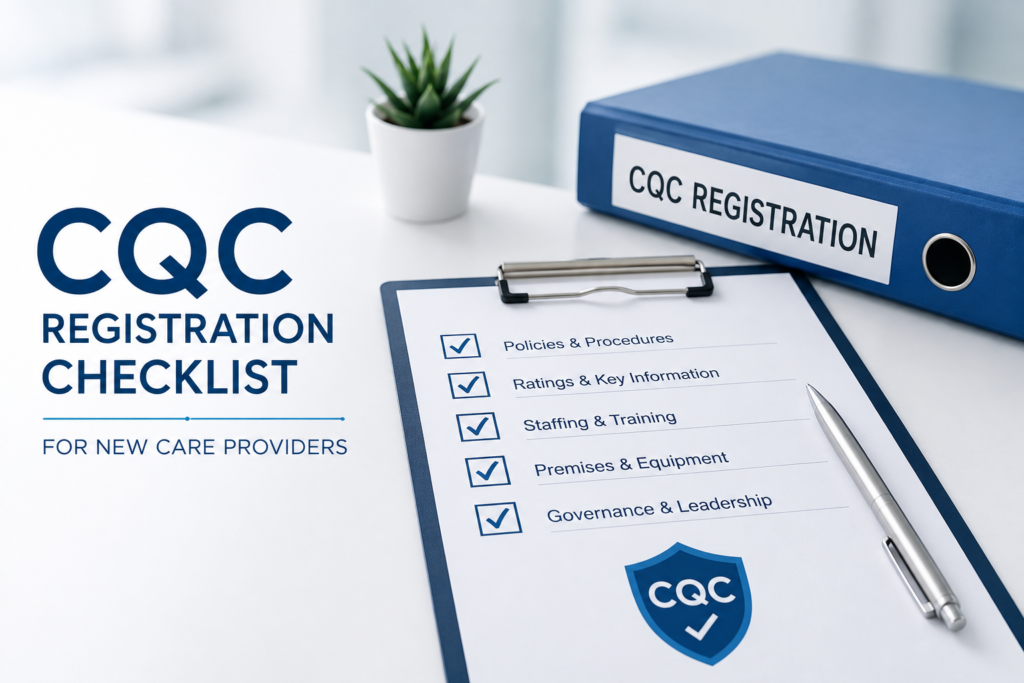
Financial viability is also relevant before a new regulated service begins operating. CQC’s current guidance states that a financial viability statement is required for relevant new provider applications, with specific exemptions including corporate providers, NHS trusts, care homes, home care agencies, and supported living services. The statement must contain information about the business and the financial specialist providing the assurance.
Where required, the statement must be signed by a professionally qualified accountancy company or an FCA-regulated bank or financial services firm. The financial specialist may need to review the provider’s business plan before confirming their view of financial viability.
This demonstrates why financial planning should be developed alongside operational and regulatory planning rather than treated as an administrative task at the end of the registration process.
Financial Governance And Ongoing CQC Readiness
Strong care provider finances should form part of wider governance arrangements. CQC’s registration guidance identifies governance as including systems for managing the organisation effectively, monitoring and improving quality and safety, acting on feedback, and maintaining accurate records.
Financial governance can support this wider framework by giving leaders regular information about the resources available to deliver services and the risks that may affect sustainability.
For providers subject to CQC’s Market Oversight Scheme, financial sustainability is also monitored because the scheme covers certain adult social care providers considered difficult to replace. CQC can use specialist financial reviews to examine areas such as financial performance, projections, restructuring plans, and solvency.
Build Financial Management Into Compliance Planning:-
Effective financial management for care providers should not be limited to preparing accounts or meeting tax deadlines. It should help management understand whether the organisation can continue funding safe, appropriate, and sustainable care.
A practical approach is to combine regular financial reporting with cashflow forecasting, budget monitoring, risk thresholds, documented management actions, and periodic review of financial assumptions.
The result is a more complete view of organisational performance: not just whether the service is compliant today, but whether it has the financial capacity to continue meeting its responsibilities.
Conclusion:-
Financial management is an important part of maintaining sustainable care services. From financial viability at registration to ongoing cashflow monitoring, budgeting, record-keeping, and financial governance, providers need clear oversight of the resources supporting their regulated activities.
Good financial controls can help management identify risks early, plan for changing costs, and make decisions based on reliable information. More importantly, they connect financial planning with the practical resources required to maintain safe and effective care.
Elberra Consulting supports UK health and social care providers with accounting, financial management, and compliance-focused advisory services. Speak with our team to strengthen your financial controls and build a clearer view of your organisation’s financial and regulatory position.
Frequently Asked Questions
Is Financial Viability Part Of CQC Compliance?
Yes. Regulation 13 requires providers to take reasonable steps to maintain the financial viability of their regulated activities and have the resources needed to provide services in line with their Statement of Purpose.
What Financial Records Should A Care Provider Maintain?
The appropriate records depend on the organisation and its activities. Financial accounts, budgets, cashflow information, payroll records, invoices, expenditure records, and debtor information can all support effective financial oversight.
Why Is Cashflow Important For Care Providers?
Cashflow shows whether a provider expects to have sufficient funds available to meet upcoming financial commitments. Regular forecasting can help management identify potential financial pressure before it affects service delivery.
Does CQC Check Financial Viability During Registration?
For relevant applications, yes. CQC uses financial viability evidence to establish whether a provider has the finances to provide and continue its proposed service. Certain provider types are exempt from submitting a financial viability statement.
Can Poor Financial Management Affect Care Quality?
It can create operational risks. Financial pressure may make it harder to maintain staffing, equipment, premises, supplies, training, and other resources required for safe and appropriate care. Effective financial planning helps management identify and address these pressures earlier.